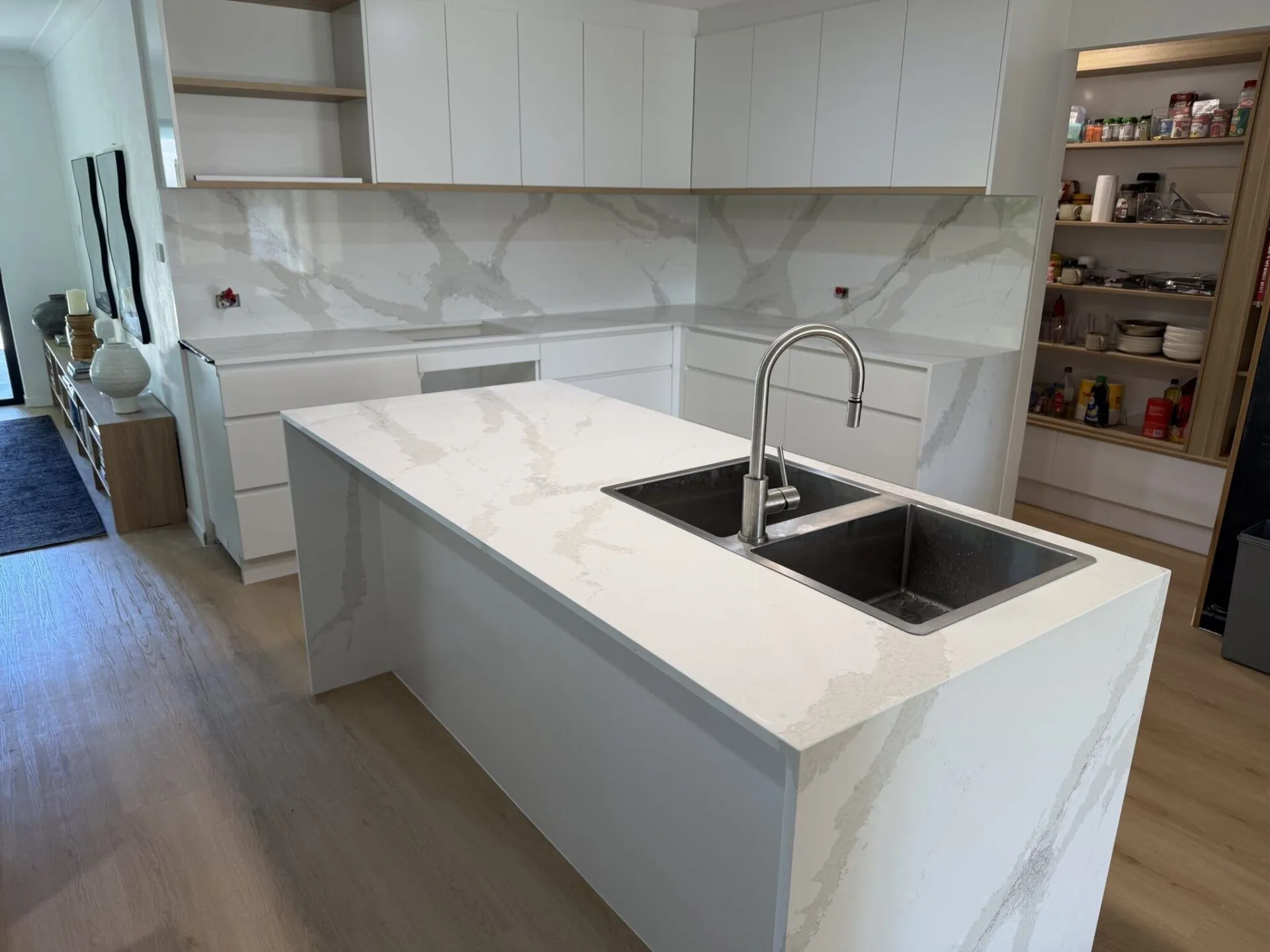
A well-designed splashback does more than protect your walls. It can become a striking design feature, add value to your home, and create a seamless, luxurious finish that ties the entire kitchen together. Whether you’re renovating or building new, understanding both the design possibilities and Australian compliance requirements is essential before choosing your splashback.
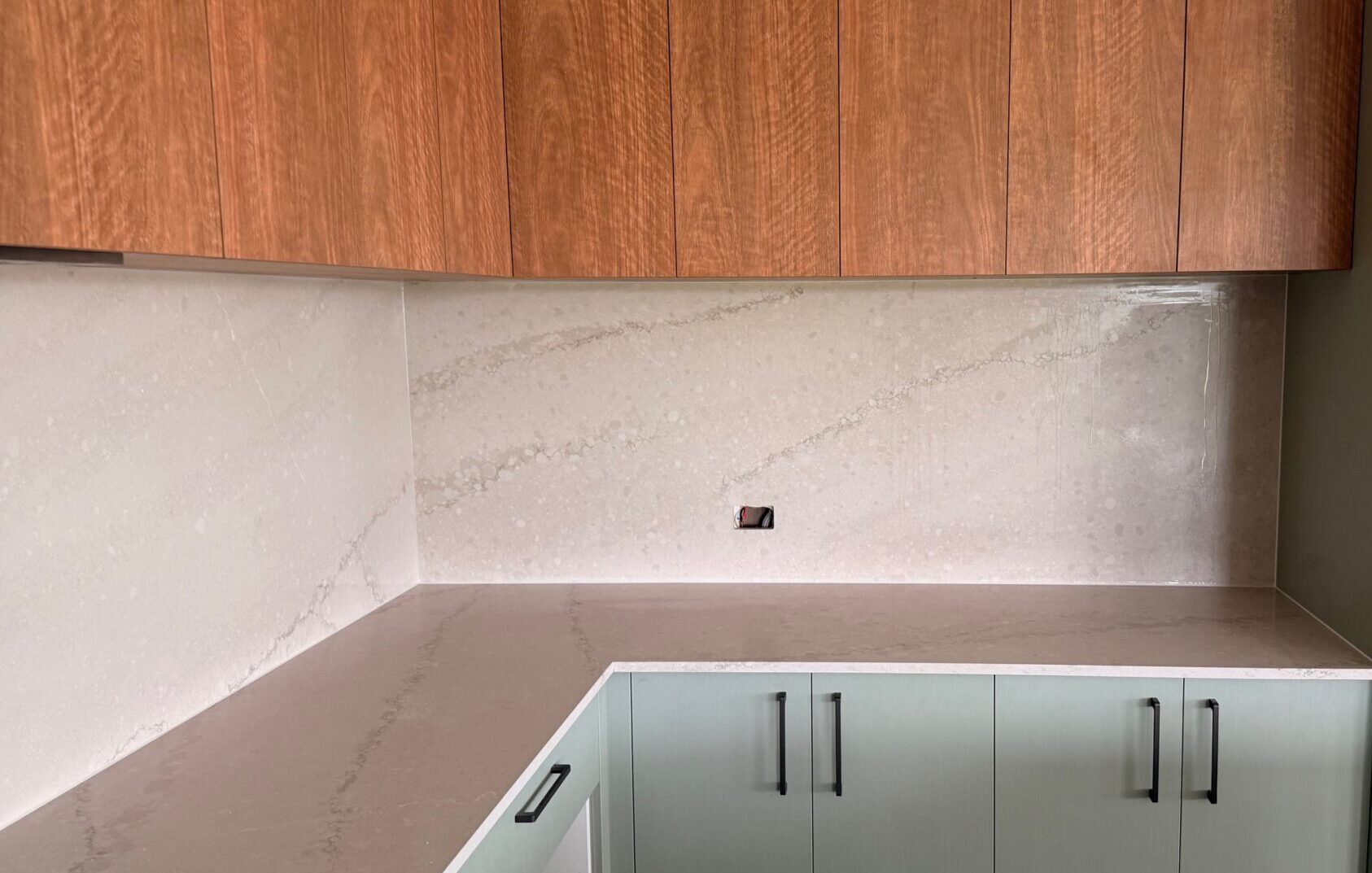
Why Splashbacks Are So Popular
Modern homeowners are increasingly choosing full-height stone and large-format splashbacks to create a clean and sophisticated look. With fewer grout lines and a seamless transition from benchtop to wall, splashbacks can make a kitchen feel larger, brighter, and more premium.
Some key benefits include:
- Easy cleaning and maintenance
- Protection against moisture, grease, and food splatter
- Improved durability and longevity compared to painted walls
- A seamless, high-end aesthetic
- Increased property appeal and resale value
Large stone splashbacks have become particularly popular due to their stain resistance, heat resistance, and being available wide range of colours and finishes.
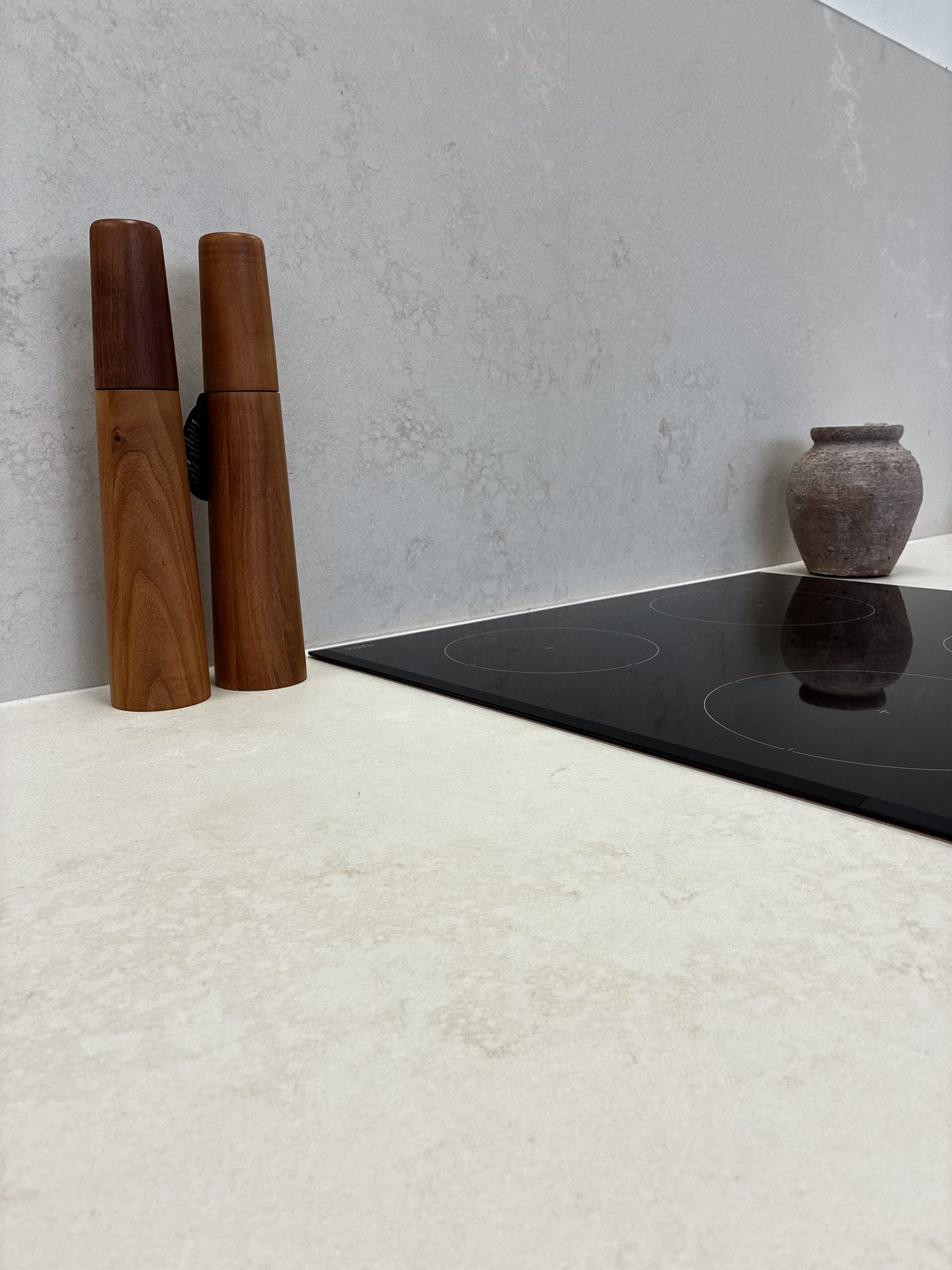
Design Considerations
Matching vs Contrasting
One of the biggest decisions when selecting a splashback is whether to continue the benchtop material up the wall or choose a contrasting finish.
A matching splashback:
- Creates a seamless, modern appearance
- Makes smaller kitchens feel larger
- Highlights the beauty of veining and texture
A contrasting splashback:
- Creates visual interest
- Adds depth and character
- Allows for colour accents and feature areas
Full Height Splashbacks
Full-height splashbacks extending to overhead cabinets or rangehoods continue to dominate Australian kitchen design trends. They eliminate grout lines, create a luxurious aesthetic, and provide the easiest cleaning surface.
Veining and Movement
When selecting stone-look, consider how the veining will flow from the benchtop into the splashback. Bookmatched and continuous-vein installations can create a truly architectural statement.
The Important Bits Nobody Reads
Gas Cooktops: Important Australian Regulations
When installing a splashback behind a gas cooktop, safety requirements become particularly important.
Australian Standard AS/NZS 5601.1 requires protection where combustible surfaces are located within 200mm of the nearest gas burner. If this clearance cannot be achieved, suitable non-combustible protection must be provided.
It is also important to remember that appliance manufacturers may specify greater clearances than the Australian Standard. For Better Stone is it require that for Gas Cooktops they must be installed with a 60mm gap from the back of the cooktop to the start of splashback or 200mm from edge of rear gas burner.
Induction and Electric Cooktops
Induction cooktops do not produce an open flame and generally have fewer clearance requirements than gas appliances.
There is currently no specific regulated minimum clearance for combustible splashbacks behind induction cooktops under the same gas installation standards. However, many splashback manufacturers recommend maintaining approximately 50mm clearance from the rear edge of an induction or electric cooktop to the splashback, this is the requirement when installing Better Stone benchtops. This requirement is less to do with the heat and more to do with practicality of pots hitting your splash and having enough room to cook easily on your induction cooktop. These clearances can be relaxed when it comes to induction cooktops so if you have shallower benchtops always best to speak with your stonemason, builder or cabinet maker for guidance.
Final thoughts…
A splashback is one of the hardest-working surfaces in your kitchen, but it should also be one of the most beautiful. By selecting the right material and ensuring compliance with Australian installation requirements, you can achieve a kitchen that delivers both style and long-term performance.
When planning your project, always consult your installer, builder, and appliance manufacturer’s installation guidelines, particularly when installing splashbacks behind gas cooktops. The right design and correct installation will ensure your kitchen remains safe, compliant, and stunning for years to come.
Synterra Surfaces’ collections offers the perfect solution for modern Australian splashbacks, combining timeless design with the durability today’s kitchens demand.